Paper Garland or Fabric Bunting for a Neighbourhood Gathering?
Choose paper garland or fabric bunting for your neighbourhood gathering by matching preparation time, shared making and clean-up to the occasion.
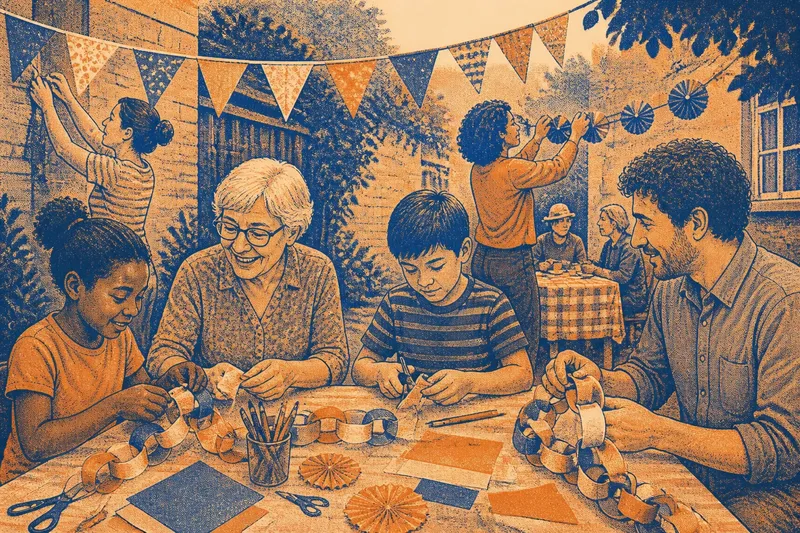
Paper garland or fabric bunting for a neighbourhood gathering: which will suit the people, preparation time and plans for the space? The useful distinction is not simply disposable versus reusable. Paper often makes it easier for newcomers to join in on the day, while fabric can suit a gathering where organisers have time to prepare, mend and store decorations between occasions.
Choose paper when participation needs to happen on the day
If neighbours will arrive at different times, paper garland can turn decoration into an open-ended activity. Someone can cut a strip, fold a fan or add a paper shape without needing to learn a complicated technique or stay until the whole length is complete. Latecomers can contribute, leave for a while and return without holding up the group.
That flexibility is useful at a street party, a shared lunch in a hall or a drop-in afternoon where children and adults may sit together briefly. Paper also offers plenty of ways to join in: drawing, cutting, folding and arranging shapes can each be a complete contribution. Choose a simple design, such as linked loops or folded rosettes, so pieces made by different hands can sit together without needing to match exactly.
Set out lightweight paper, blunt-ended scissors, pencils and a few prepared strips. Keep the work within reach of a table rather than asking people to carry scissors around the venue. If the gathering is outdoors, paper can crease or tear in damp weather and may move in a breeze, so keep the garland for a sheltered spot or an indoor entrance.
Choose fabric when preparation and future use are part of the plan
Fabric bunting makes sense when a small group can prepare before the gathering and someone has room to keep the pieces afterwards. Cotton offcuts, old shirts or remnants from a local sewing group can give the project a shared source of materials. A repeated triangle or rectangle shape makes separate pieces easier to combine along a length of tape or binding.
Fabric also suits a gathering where people want to contribute through different kinds of work over time. One person might sort washable scraps, another could cut shapes using a cardboard template, and someone comfortable with a sewing machine could assemble the finished length. That division can be welcoming, but it is less spontaneous than paper craft: not every contribution can be completed at the table during the event.
Think about storage before making a long length. A fabric decoration needs to be folded or rolled so it is ready to find again, and a named storage box in a community cupboard can prevent it disappearing between gatherings. Check the fabric care label and any maker’s guidance before washing or ironing it; where no reliable care information is available, keep the decoration dry and brush off loose dirt rather than guessing.
Let the setting decide what is practical
For a one-off indoor gathering, paper is often the easier choice if the group has limited storage and wants decoration made alongside the event. The pieces can be adapted to the room’s colours and theme, and there is no need to organise a return trip to collect bunting afterwards. If the occasion is likely to recur and a few neighbours already share sewing skills, fabric may be a more manageable project over several sessions.
Outdoor use needs a closer look at the location. Paper may not suit an exposed fence on a drizzly day, while fabric can also become heavy or dirty if left out in poor weather. Consider the sheltered areas available, how the decoration will be secured, and who will take it down when the gathering ends. Follow venue rules and the decoration maker’s instructions for attachment; do not block entrances or routes people need to use.
Say you are organising a courtyard tea where neighbours will drop in after work, and there is no cupboard for shared supplies. A paper-loop garland made at the event could fit: visitors can add a few loops at their own pace, and organisers can take it down at the end. If the same group later plans a regular indoor craft afternoon and has a place to store decorations, fabric bunting could fit that different situation better.
Match the material to the kind of contribution you want
Neither material makes a gathering welcoming by itself. The activity works best when a person can understand what to do, contribute at a comfortable pace and stop without leaving a difficult unfinished task. Paper supports small, self-contained contributions; fabric is a good fit when people are happy to share out preparation and assembly across a team.
- Choose paper if people will arrive and leave at varied times.
- Choose paper if you want several simple ways to contribute, such as drawing, folding or cutting.
- Choose fabric if a small organising group can prepare materials before the gathering.
- Choose fabric if there is a clear place and person for storing it afterwards.
- Choose either if the group can keep the design simple and adapt it to the room or sheltered outdoor space.
A useful compromise is to keep the activities separate rather than asking one material to do every job. Paper shapes can mark a particular gathering, while fabric bunting can be saved for repeated events. That choice is not a judgement about which material is better; it reflects what the group can prepare, enjoy and look after.
Which decoration fits your gathering?
Is paper garland easier for a drop-in event?
Usually, yes, because a person can make a small section without joining a long task or learning to sew. It is a strong option when participation is brief and people may come and go.
Does fabric bunting need to be sewn?
Not necessarily, but a finished length needs a joining method that suits its materials and intended use. If nobody in the group wants to sew, choose a simpler paper design or plan a fabric activity around skills and equipment already available.
Which material suits an outdoor neighbourhood gathering?
Neither is automatically right: sheltered placement and the weather matter more than the label. Paper can be vulnerable to damp and wind, while fabric needs taking down and storing cleanly after use.
Can a group combine paper garland and fabric bunting?
Yes, if each has a clear purpose, such as reusable fabric for a regular indoor event and paper for a one-off occasion. Keeping the jobs distinct makes the preparation and tidy-up easier to share.
For a neighbourhood gathering, paper garland or fabric bunting becomes a straightforward choice once you know whether the priority is making together on the day or preparing something the group can bring out again. Start with the people, setting and after-event storage, then choose the material that fits those conditions. The best decoration is the one neighbours can contribute to comfortably and organisers can sensibly put away or clear up.