From Harvest Supper to Shared-Making Afternoon: How the Community Work Party Brings Neighbours Together
A community work party pairs a useful shared task with a welcoming social occasion, helping neighbours contribute at different paces and feel part of a local effort.
What makes a community work party feel like a gathering rather than a chore rota? The answer is usually the combination: neighbours take on a useful shared task, then make room for conversation, food and a sense of having spent time together. A community work party can be as modest as sorting donated books before tea or as seasonal as preparing a community garden for autumn.
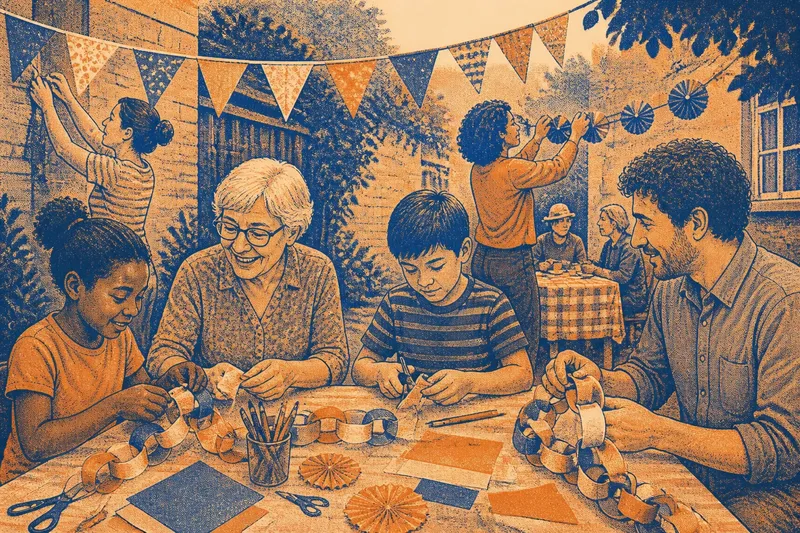
The format has no single origin to claim. Harvest suppers, communal preparation for local events, working bees and shared repair days all point to a familiar idea: a group can bring its hands and its company to the same occasion. Here are seven features that explain how that blend works, and how to shape one for a neighbourhood today.
1. A shared task gives the gathering a reason to happen
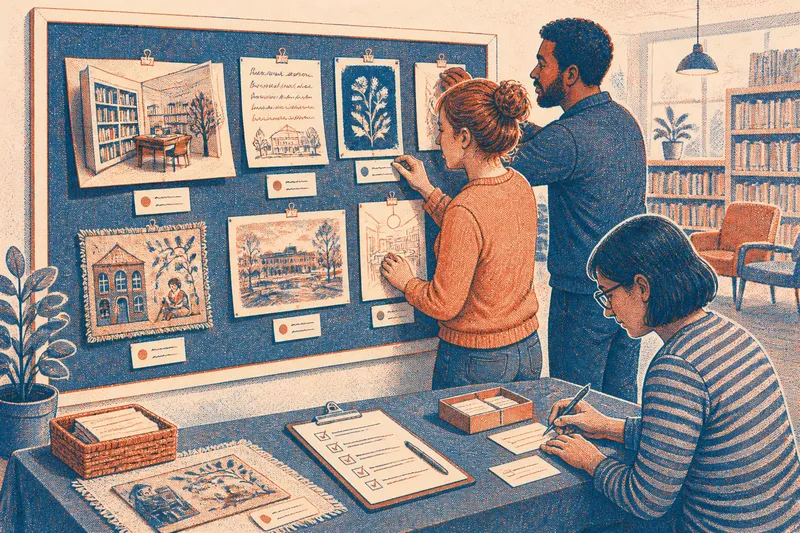
A work party begins with something people can do together. That task might be cleaning reusable pots for a plant swap, sorting materials for a community hall, or making simple repairs to items brought to a local mending session. The task gives the invitation a clear purpose, so people know what they are coming to join.
Its usefulness need not be dramatic. A small piece of collective care can be more inviting than an ambitious project with a distant finish line. It also gives newcomers an easy opening: they can ask what needs doing, take a place beside someone, and start talking without having to invent a reason to approach.
Choose a task that can be divided into understandable parts. If the work is difficult to explain or depends on a few specialists, it may be better suited to a separate working session. A community work party is strongest when ordinary participation counts and the group can see what its shared effort is for.
2. The format joins productive time with social time
At a harvest supper, people may have helped prepare food before sitting down to eat. In a shared-making afternoon, the social occasion can sit alongside the task rather than follow it as a formal reward. Someone may work while chatting; someone else may pause for a cup of tea and return when ready.
This flexible rhythm matters because neighbours arrive with different energy, abilities and schedules. A work party does not need everyone to be busy at once. A clear welcome, an available seat and a visible task can make participation feel natural even for someone who cannot stay long or prefers to watch before joining in.
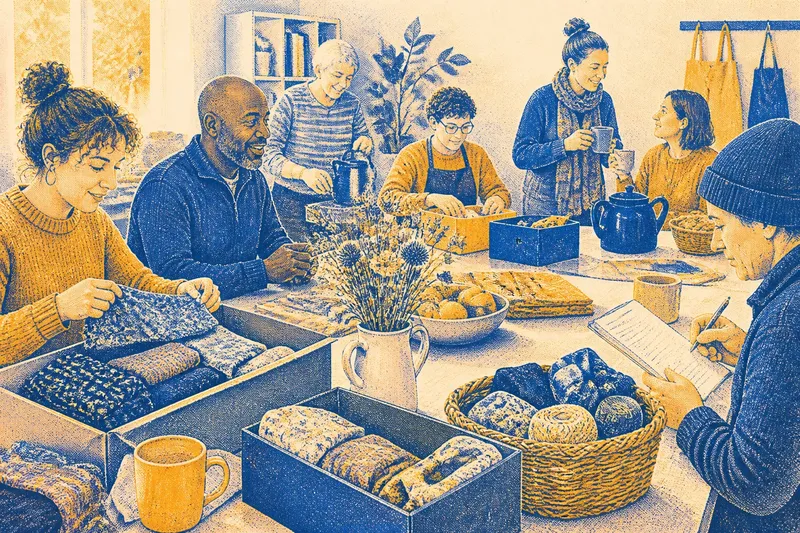
Say you are organising a hypothetical afternoon to sort donated fabric for a local sewing group. You set out labelled boxes, invite people to bring a mug, and leave one table clear for anyone who would rather sit and talk. The expected observable result is a session where people can help in a practical way without treating continuous work as the price of belonging.
3. A task with several kinds of contribution welcomes more people
Not everyone wants to lift, cut, sort or make. Some people are good at welcoming visitors, keeping a list, explaining the task, fetching supplies or making sure the kettle is filled. A well-shaped work party recognises those contributions as part of the shared effort, rather than presenting them as extras.
Offer a few distinct ways to take part. For a community garden tidy-up, one person might label seed trays, another might sweep, and someone else could greet neighbours and record which tools need returning. The roles should be plainly described, and people should be able to choose rather than being assigned a job on arrival.
It helps to think about access before setting out the materials. Are there seats? Can someone contribute without using tools? Is the task manageable for a first-time visitor? A simple alternative role can make the invitation more genuine than a broad promise that everyone is welcome.
4. Food and small rituals mark the occasion
Shared food is a familiar companion to collective work, from harvest meals to a plate of biscuits beside a repair table. It marks the event as more than a list of jobs. The food can be simple: tea, fruit, soup brought by volunteers, or a shared snack that does not require anyone to cook.
Rituals can be just as modest. Begin with a short welcome and a description of the task. Pause together at a natural point. Before leaving, thank people and name what will happen next. These moments give the afternoon a shape, while leaving room for the work and conversation to unfold at their own pace.
Keep the welcome practical and relaxed. If food is involved, say what is available and invite people to bring something only if they wish. For allergies or other dietary needs, make the options clear and ask guests to use their own judgement; a local organiser can seek suitable advice if the occasion involves more complex requirements.
5. A visible purpose helps the group share responsibility
People are more likely to understand a work party when they can see what the task supports. A note on the table might explain that cleaned jars will be used for a neighbourhood preserve exchange, or that sorted books will help restock a community reading corner. The explanation need not be grand; it simply connects the activity to a local need.
Make the task’s boundaries clear. Say what the group is doing today, what is outside the session, and who will look after anything unfinished. This prevents an open-ended invitation from quietly becoming an expectation that attendees take on ongoing responsibility. A shared afternoon should offer a contribution, not an unspoken contract.
It can also be useful to name the people or place that will benefit, with their agreement. That keeps the purpose grounded and gives participants a reason to care about the details, such as sorting materials carefully or leaving a shared room tidy.
6. The best pace leaves room for conversation
A work party can be sociable without turning every moment into organised entertainment. Conversation often starts naturally when people work side by side. If the task demands concentration, people may talk less while doing it and catch up during a pause. Both patterns belong to the same kind of gathering.
Set out materials so that people do not have to crowd around one person or wait for constant instructions. A written note, a sample of the finished task or a clearly labelled box can help newcomers get started. Keep the task flexible enough for people to step away, ask a question or switch roles without disrupting the whole group.
Some neighbours will prefer a quiet, focused role; others will come chiefly for company. Neither needs to be treated as the correct way to attend. A welcoming host can introduce people, explain options and then let the room find its own conversational rhythm.
7. A small follow-through carries the gathering forward
When the session ends, offer a brief account of what the group accomplished and what remains. This is not a scorecard. It gives the afternoon a satisfying close and helps people understand whether another gathering would be useful. If a follow-up is planned, share the details only when they are settled.
Take care with shared tools and borrowed spaces. Put materials away, return keys through the agreed arrangement and leave the venue in the condition expected by its owner. If the task involves equipment or materials with particular handling requirements, follow the relevant maker instructions or local rules; ask a qualified professional where the work raises safety concerns.
A community work party works best when its usefulness and hospitality support each other. The task gives neighbours something to gather around; the social space lets people contribute in their own way. That combination is what carries the idea from a harvest supper or shared preparation day into a present-day afternoon of making and local care.
For a first community work party, choose one clear task, one relaxed social touch and a few ways to help. The invitation can be simple: come for the work, the company, or a little of both. A neighbour who leaves knowing what the group did—and feeling comfortable enough to return—has already helped make the next gathering possible.